
Attio
CRM built on a flexible data model, with AI agents and workflows
 1/2
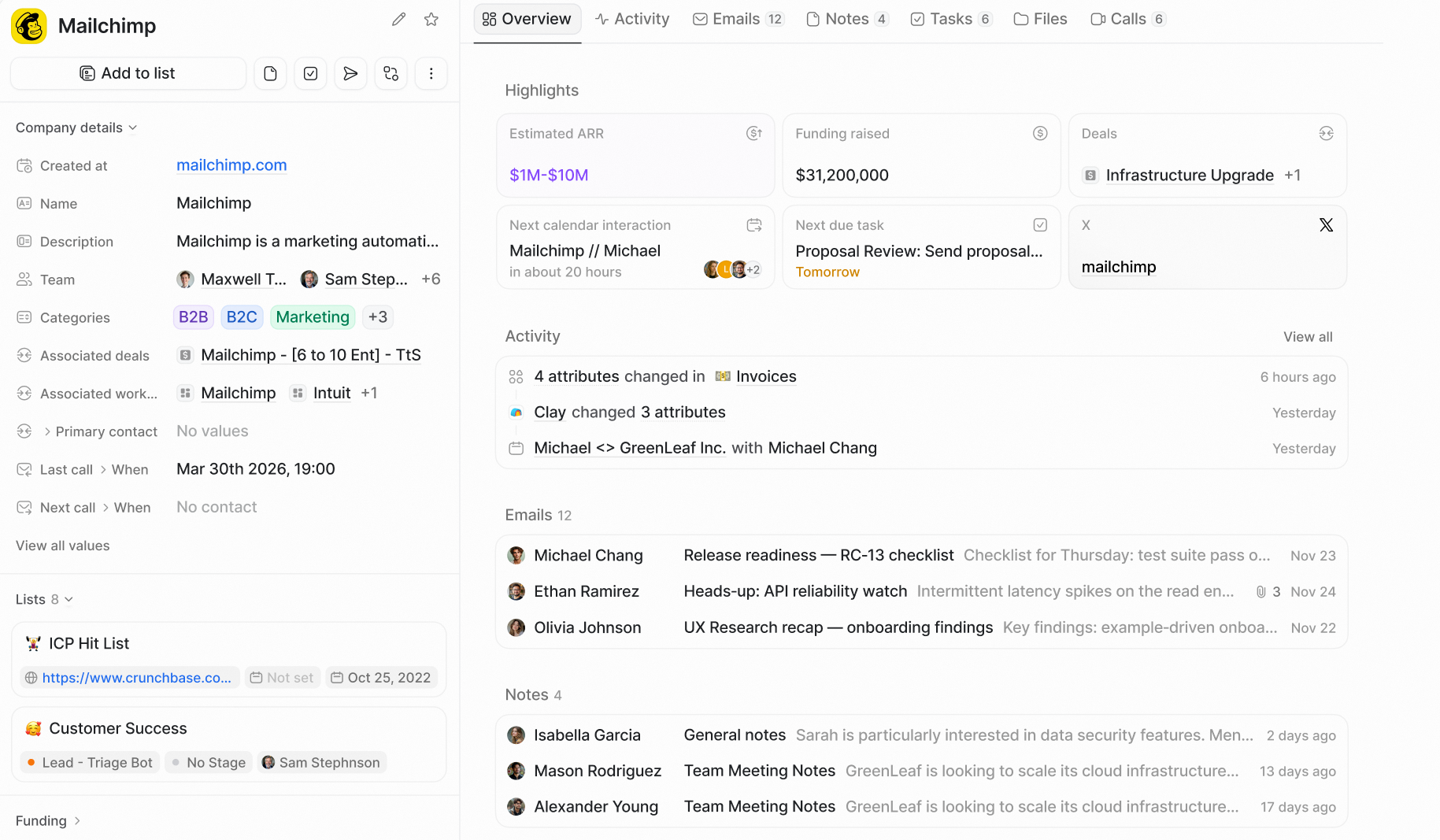
1/2Attio is a CRM you shape around your own business rather than around fixed lead and opportunity records: objects, attributes and relationships are defined by you, and records are built from real activity. Connected email and calendar accounts sync contacts in real time, records are enriched automatically, and Call Intelligence records and analyses meetings. Workflows automate multi-step revenue motions, sequences send personalised outreach, reporting runs on live data, and Ask Attio searches and creates records from natural language. There is an API, an app SDK and an MCP server for building on top of it. Plans are priced per user and metered in seat and workspace credits: Plus and Pro are $44 and $99 per user monthly, or $35 and $79 billed annually, and higher tiers raise the limits on objects, records and email accounts while adding permission controls, advanced reporting and unlimited teams.
- Flexible data model with custom objects and attributes
- Real-time contact syncing from email and calendar
- Automatic data enrichment on companies and people
- Call Intelligence records and analyses meetings
- Workflows automate multi-step revenue motions
- Sequences for personalised outreach from inside the CRM
- Ask Attio searches and creates records from plain language
- API, app SDK and MCP server for building on Attio
Based on what people have said
Every answer links back to the mentions it came fromHow does Attio compare to HubSpot for small teams?
Several users suggest Attio is more ready out of the box for small teams and offers a lightweight, flexible alternative to HubSpot. However, others note that HubSpot provides a broader set of marketing and sales capabilities, such as landing pages and email sequences, which might make it preferable despite the complexity.
3 mentions · r/gtmengineering · r/Entrepreneurs · Aug 2026 – Sep 2026
What are the primary benefits of Attio's flexible data model?
Users report that the flexible records allow teams to build a customer view that aligns with how they actually work, rather than forcing them into a rigid enterprise setup. It is described as a system that can be shaped around a team's specific workflow.
2 mentions · r/CRMSoftware · r/smallbusinessUS · Aug 2026
Is Attio suitable for teams that require extensive customization?
While some users find the product great, others have noted that they eventually required more flexibility and extensibility than the platform provided, leading them to consider coding their own custom CRM solutions.
2 mentions · @albertorosasg · r/gtmengineering · Aug 2026
How does Attio fit into a broader sales or data stack?
Attio is used alongside various other tools, including data enrichment platforms like Clay and Skrapp, as well as outreach tools like Instantly and lemlist. Some users also integrate it with voice-based AI agents to automate meeting debriefs and follow-ups.
4 mentions · r/content_marketing · r/CarPlay · @MichLieben · r/CRMSoftware · Aug 2026 – Sep 2026
These summarise counts and dates only. Read the quotes themselves under what people are saying.
What people are saying about Attio
59% neutral“hubspot vs attio for a lean gtm team comes down to how much of the workflow you want in one place”
“i’d probably compare attio with hubspot on how much work it takes to keep the pipeline current once the team gets busy.”
“maybe im missing something here but what makes attio worth testing over close or hub spot for this use case? Is it actually better for the day2day workflow or is it just a simpler crm & would you still recommend it if the team needs calling and outreach built into the same workflow?”
“Finally, I'd also consider Attio, they do have that workflow tree mentality that you mentioned pretty well dialed in”
“If you are still figuring out CRMs you can check out Attio, for data enrichment do have a look at Skrapp, it's native integration with CRMs help you make sure your CRM email data is clean and up to date.”
“that’s one thing i like about attio, the flexible records make it easier to build that kind of customer view around how the team actually works.”
“once you have customer info, follow-ups and a few recurring processes to manage, though, something like attio can give you one system built around your workflow without feeling like a huge enterprise setup”
“Attio is much more ready out of box for small team. But depends how much you need marketing stuff built in, if you doing email sequences and landing pages then maybe worth the pain of hubspot”
“Attio seems appealing if you want something lightweight and flexible, while HubSpot has a much broader set of sales and marketing capabilities around the CRM.”
“Záboj connects to your own accounts through MCP (Gmail, calendars, Slack, Pipedrive, Attio, Notion, or any MCP server URL you add) and does real work by voice - my daily flow is dictating a meeting debrief that lands as a structured CRM note plus a drafted follow-up. And it holds an actual conversation you can interrupt mid-sentence, in 30+ languages.”
“6 of the 7 data sources, + Instantly, lemlist, PredictLeads & Attio sit behind the ColdIQ”
“📌 Attio just turned a sales-team tool into a whole-company one. I broke down exactly how they did it →”
“Attio, zoho, pipe drive ? Considering these too”
“My stack: HubSpot, Salesforce, and Attio on the CRM side. Clay, enrichment, and TAM builds for data.”
“The day has arrived… time to code our own CRM 😅 I’ve been very happy with Attio, it’s a great product. But we need way more flexibility and extensibility.”
“If you are a Monero bro with a business and thinking about subscribing for HubSpot, Salesforce, Zoho, ActiveCampaign, Attio, Keap, or GoHighLevel: don't do it yet. Please talk to me first!”
“When do you decide to really put the time into attio or HubSpot, or are they even necessary at this point? Obviously, this is not talking about clients that are already too far gone to fully adapt to this, but If that's the way you're building today, through coding agents, does building your own custom CRM become inevitable?”